
Evolutionary Community Ecology
Dr Jan Frederik Gogarten
Our Research
Human activities are reshaping the planet at unprecedented speed. As temperatures rise and natural habitats shrink, animal communities are shifting, with cascading effects on behaviour, ecology, and the rich microbial worlds animal’s host. Because species interact through social ties, trophic links, and shared vectors, microorganisms can move within and between species—including humans, who are increasingly embedded in these networks. Most emerging infectious diseases originate in wildlife, while pathogens also flow from humans to animals, affecting conservation and population persistence. The Evolutionary Community Ecology group studies how changes in animal communities reshape their microbial communities, disease dynamics, and pathogen transmission—including spillover risks to people.
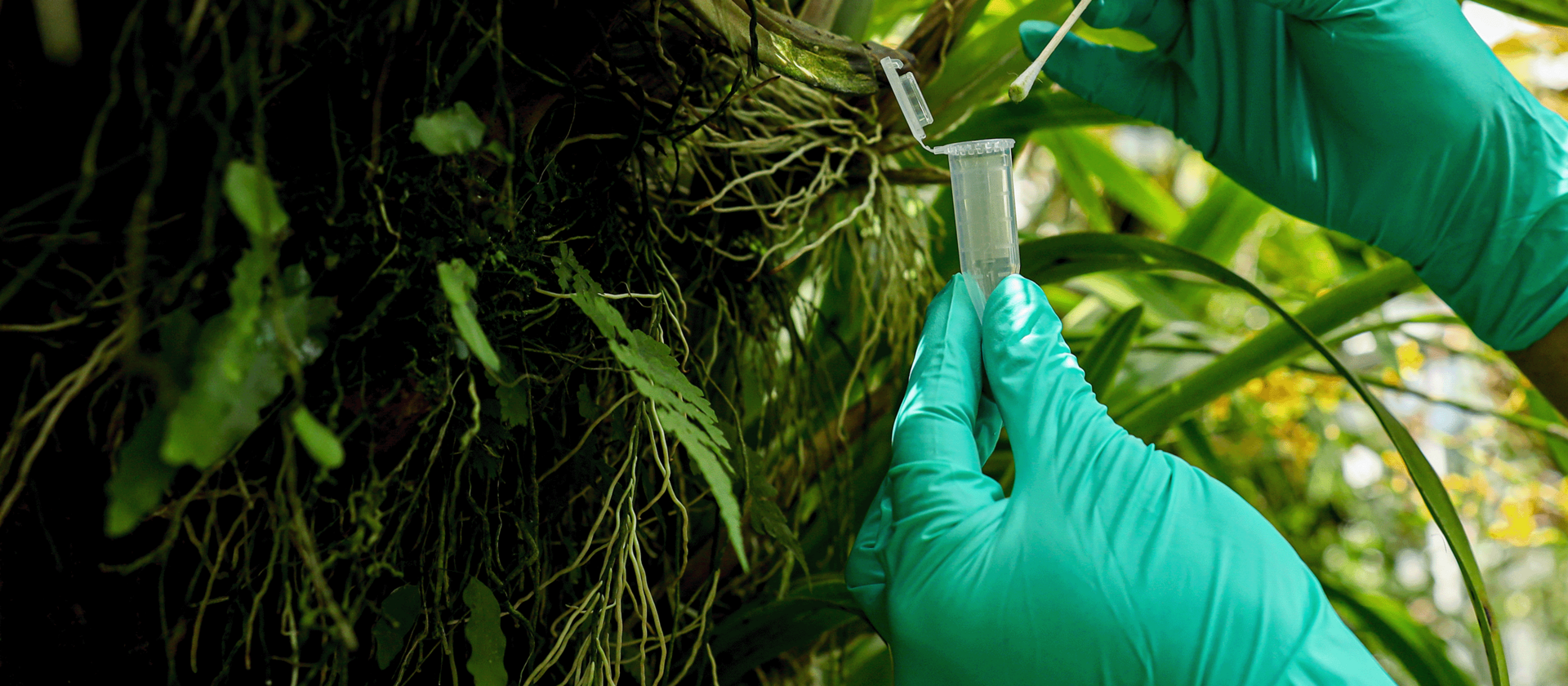
New theoretical and practical advances in community ecology now allow us to disentangle processes acting from within hosts to landscape and regional scales. Our group develops flexible modelling frameworks and applies evolutionary and phylogenetic tools to reveal how communities assemble, how microorganisms interact, and how hosts and pathogens switch or codiverge. By integrating eDNA and other high-throughput approaches, we generate local data on biodiversity, microbial composition, and transmission to better quantify context-specific disease risks—moving beyond simple, universal rules linking biodiversity and health. These insights help inform effective, sustainable strategies for managing disease emergence in a rapidly changing world.
Team members

Dr Jan Frederik Gogarten
Research Group Leader

Konan Benitho Goli
Guest Scientist

Dr. Alix Augusto Armero Villanueva
Scientist

Luisa Britzius
PhD Student

Nikolai Gusev
PhD Student

Olivia Dimov
PhD Student

Mercy Chagara
Master student

Caroline Röthemeier
Technical Assistant