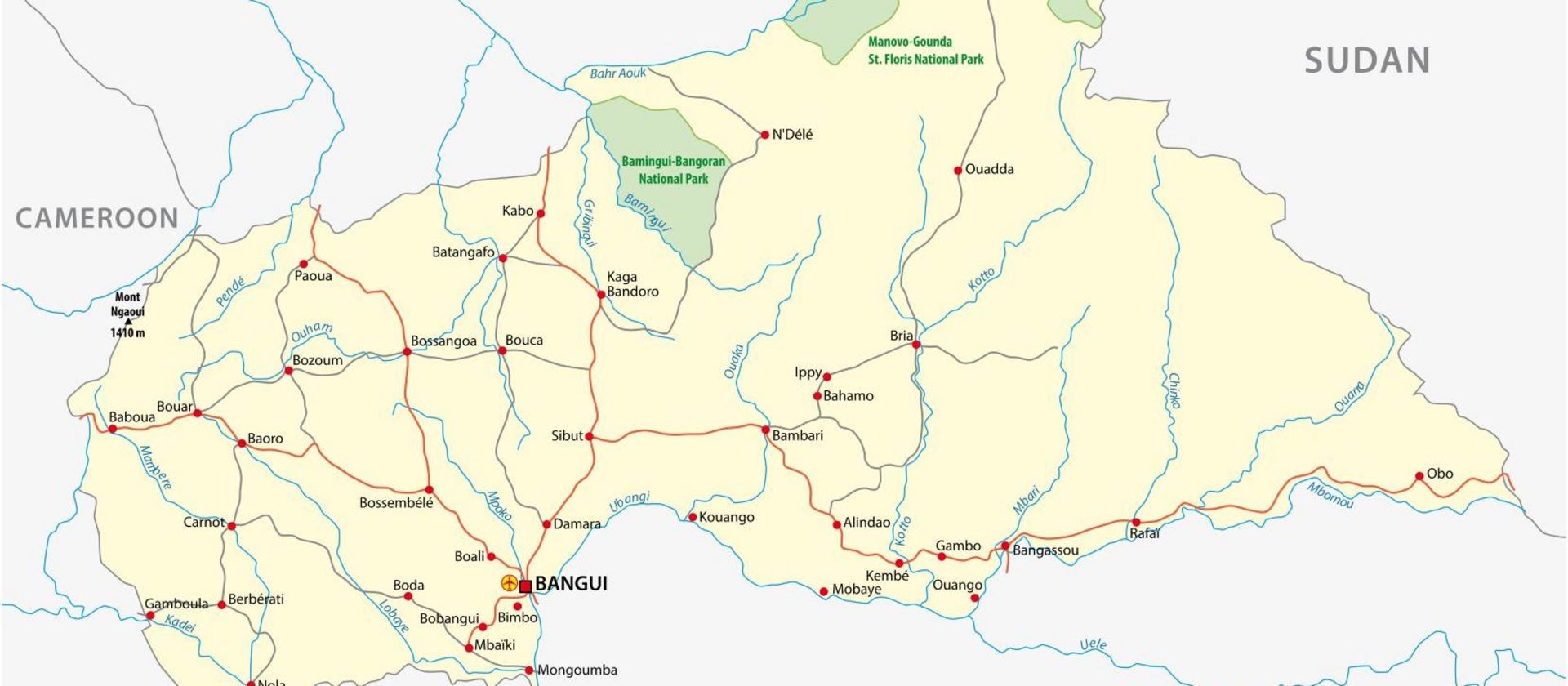
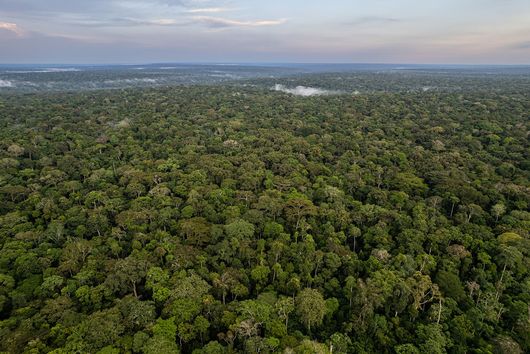
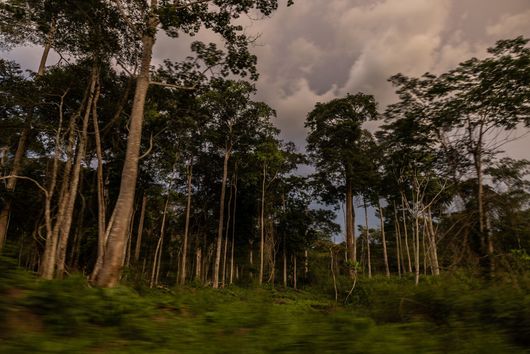
Central African Republic (CAR) is a landlocked country that extends from the rainforests of the Congo Basin in the South to the Sahelian region in the North, on a territory larger than France. The country has suffered from decades of political instability and chronic violence, and this has resulted in its being one of the poorest countries in the world. Its 5.5 million inhabitants face harsh living conditions, including a high burden of infectious diseases worsened by limited access to medical care.
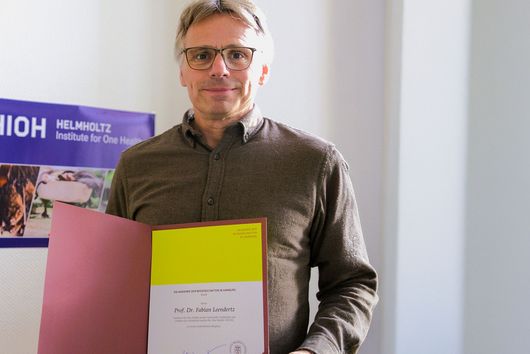
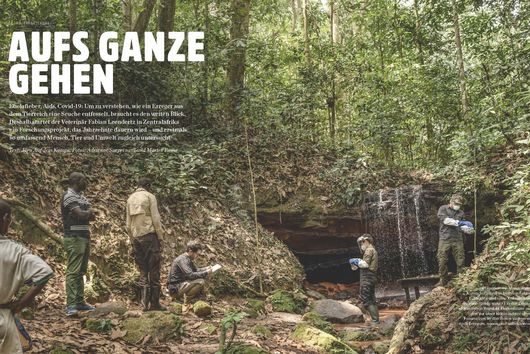
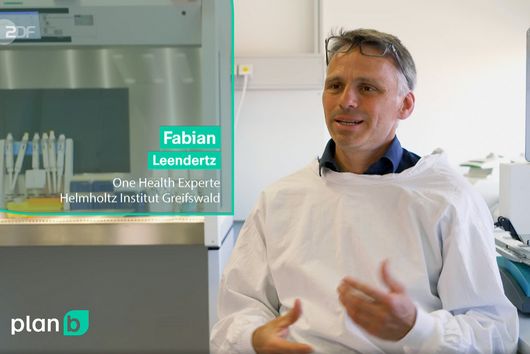
Fabian Leendertz, director of the Helmholtz Institute for One Health (HIOH) in Greifswald, has been working for more than a decade at the southernmost tip of the country, in the Dzanga-Sangha Protected Areas (DSPA). Within the framework of a close collaboration with WWF CAR, HIOH supports wildlife health monitoring in the DSPA, with a particular focus on Western lowland gorillas (Gorilla gorilla gorilla). Over the years, activities have expanded to also better characterize the human/animal interface and therefore human, animal and environmental health in this exceptional ecosystem.
The aim of this mission is to reinforce and formalize links with local stakeholders involved in public and animal health management, to present the forthcoming activities of the HIOH’s One Health Surveillance unit and to have an onsite visit of the DSPA and its current conservation and research infrastructure. The Helmholtz Center for Infection Research (HZI) is represented by the leadership of HIOH, including Fabian, Katharina Schaufler, Fee Zimmermann, Livia Patrono and Sébastien Calvignac-Spencer, as well as by Josef Penninger, scientific director of HZI. We are accompanied by Frédéric Singa, the head veterinarian of the DSPA, and Jörn Auf dem Kampe and Adrienne Surprenant from GEO Magazine.
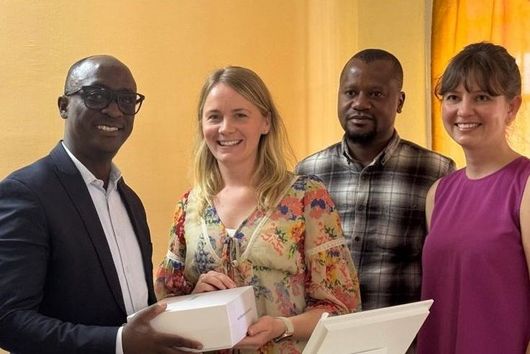
The general director Yap Boum II provides us with an overview of IPB’s activities and objectives, and extends the friendly invitation to collaborate of our host, the scientific director Emmanuel Nakoune. Emmanuel, Fabian and Josef then leave for a discussion with the minister for research, who echoes the very positive feedback of the minister for animal husbandry. There is definitely a good interministerial vibe around One Health in general, and our initiative in particular.
During this time, a young malariologist of the institute, Romaric Nzoumbou-Boko gives the rest of the group a tour of the impressive facilities. IPB offers both biological analyses and vaccinations to the public, while also providing an infrastructure for research in infectiology, from medical entomology to molecular epidemiology. We leave IPB’s premises with the nice feeling we will be back.
At the dinner table in the evening our group is very excited: tomorrow we fly to Bayanga, in the DSPA.
We land on Friday morning, and quickly settle in before a visit of the WWF CAR laboratories, newcomers at the Doli Lodge (doli means elephant in sango, the co-official and most spoken language in CAR), regular visitors in the case de passage of the WWF CAR compound that lies near the entrance of the village. In close collaboration with the forest management authorities (APDS), WWF CAR spearheads a number of activities aimed at conserving the exceptionally rich wildlife in the region, including enforcement of protected areas, ecotourism and research, with a specific focus on Western lowland gorillas and forest elephants (Loxodonta cyclotis). HIOH provides support for gorilla health monitoring, and has sent veterinarians in the region for more than 10 years.
Yanthe Nobel is one of these extremely motivated young veterinarians, and she has been instrumental in organizing this trip. Her job does not only involve classic tasks such as running necropsies on wild animals found dead in the area or assisting local crews and WWF CAR in the field and in the lab in case of outbreaks. It also requires close interactions with local populations to understand their views and needs, and therefore their relationship to domestic animals and wildlife. Public outreach is also fundamental to engage and empower communities, and in the evening, Yanthe, Fee and Fabian partake in a local radio broadcast about One Health and our activities in the region.
On Saturday morning, we head to the Dzanga Bai. A bai is a clearing, and this one is world-famous for routinely hosting 50 to 200 forest elephants. The forest camp is about an hour drive from Bayanga, and from there you need a 30 minutes walk in the forest to reach the observation tower. Hikes in the forest require the assistance of a local guide and a Ba’aka tracker. Elephants are major ecosystem engineers, and the fastest route in the forest always follow their tracks, which contributes to making accidental encounters a frequent and potentially dangerous event. Ba’aka trackers are forest people, and they excel at spotting elephants from the hardly noticeable sounds they produce while progressing in the forest. Once arrived on the platform of the wooden tower bordering the bai, the view is breathtaking. On that particular morning, about 90 elephants have come to dig out minerals from the soil, which they obtain by digging large waterholes.
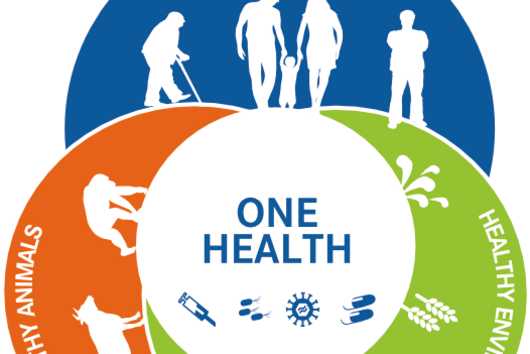
In the afternoon, we are back in Bayanga, where we will take part to the first One Health soccer tournament. Soccer is a beloved sport in the region and an excellent vehicle for public outreach. All 10 teams receive jerseys with One Health diagrams and slogans that we will later see during our car rides and walks in the village. Of course, sports are also a very good occasion to share good moments together. The HIOH/HZI/WWF CAR team is pushed out of the tournament after the group phase, and an honorable one victory/three defeats score sheet. The winning goal of our single victory is scored by Josef during penalty kicks, crowning a lifelong passion for soccer. The victors of this first tournament are the Diamonds, who convincingly dominate the final with which our second day in Bayanga comes to an end.
Like yesterday, we walk fast in the forest, following an experienced BaAka tracker – this part of the forest is also heavily exploited by elephants. Shortly before arriving where the gorillas are being observed by a small team of conservationists, we put on our face masks, a measure whose efficacy has been shown time and again. It has been implemented by Fabian at multiple sites since the late 2000s, where it has reduced the frequency of respiratory outbreaks. We will also maintain a minimum 7m distance to the gorillas.
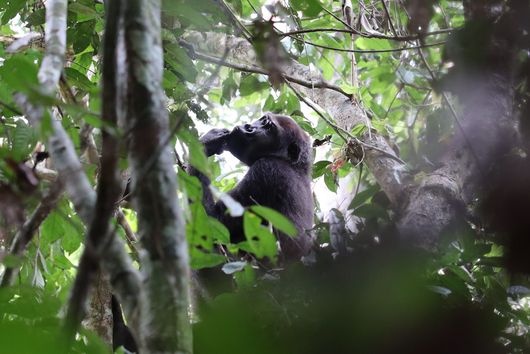
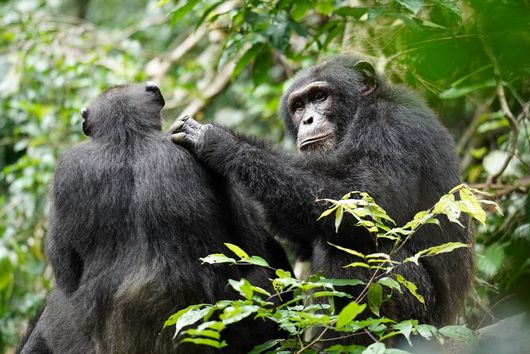
A few more meters and we can see the back of one of the two adult females of the group. Then, Makoumba, the male silverback after whom the group is named, wakes up from a short nap and slowly reveals his gigantic silhouette. A few leaves later, the group follows the old male into the canopy, the four younger gorillas playfully running on branches that defy their father’s 300 kg weight.
In the evening we are invited for a barbecue by Thomas and Lena. The Swedish couple has spent more than 20 years in Bayanga, where they raised their kids (now all adults). Thomas has dedicated his life to bringing clean water to impoverished communities in the West of the country. Lena is a nurse who worked in the village but recently lost her job –international funding ran out, local needs did not. HIOH would be very lucky to recruit her on one of its ongoing projects, and we discuss potential plans.
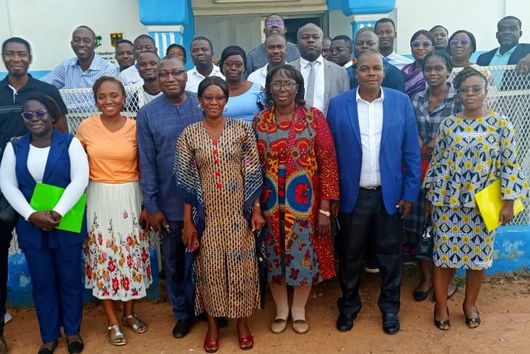
The next morning, Fabian, Josef, Fee, Livia and our local partners take part to a meeting with local executives. The chiefs of Bayanga and 8 villages in its district as well as the district leadership have all been invited to discuss about intensifying our activities in the region, and linking them in a better (One Healthy) way to ongoing public actions. There is a lot of interest for One Health among the participants, and many important questions are raised about what One Health initiatives with practical benefits for local populations might look like. Such get-togethers are instrumental if we want to not only understand how human, animal and environmental health are connected, but also act on problems, leveraging this kind of knowledge.
Now, it is already time to head back to the capital. There, we will have two very interesting meetings over the next two days. We first meet the rector of the University of Bangui, Prof. Gresenguet. This university is the only public provider of higher education in the country, and it therefore plays an instrumental role in its development plans. We briefly meet with enthusiastic students, and promise to be back for a series of lectures. We also have the chance to meet Didier Kassaï. Didier is an illustrator who began his career in editorial cartooning in the late 1990s, and more recently chronicled the years of war in beautifully crafted graphic novels. He speaks very candidly about his life back then, further north, as he documented his daily life under gunfire. He has also used his illustration skills to contribute to public health communication projects, and we will undoubtedly call on him in the near future.
LeMonde article on the work of Didier Kassaï
After about ten days of intense meetings and discussions, we are traveling back to Europe, well aware of the privilege of being among the few to work in such a beautiful country, where people unfortunately have such a tough life. We will, of course, continue to develop our One Health surveillance project in the region of Bayanga, for the benefit of science and, more importantly, the populations.

![[Translate to English:] Gruppenbild](/fileadmin/HIOH/__processed__/1/6/csm_2_IMG_50681_8a97563ece.jpg)
![[Translate to English:] Ufer](/fileadmin/HIOH/__processed__/b/e/csm_3_IMG_5094_1__4f68a94281.jpg)
![[Translate to English:] Straße](/fileadmin/HIOH/__processed__/a/a/csm_4-IMG_5161_ac24351b04.jpg)
![[Translate to English:] Schild](/fileadmin/HIOH/__processed__/8/2/csm_5-IMG_5110_1__83a9fb9fcb.jpg)
![[Translate to English:] Gebäude](/fileadmin/HIOH/__processed__/3/0/csm_6-IMG_5107_1__93d9d73434.jpg)
![[Translate to English:] Baum](/fileadmin/HIOH/__processed__/c/8/csm_7_IMG_21651_42923d05c6.jpg)
![[Translate to English:] Gruppenbild](/fileadmin/HIOH/__processed__/f/5/csm_8-IMG_5173_68d5370392.jpg)
![[Translate to English:] Elefanten](/fileadmin/HIOH/News/10-AdobeStock_402336596.jpeg)
![[Translate to English:] Elefant](/fileadmin/HIOH/__processed__/8/6/csm_11_IMG_5248_e85d35c335.jpg)
![[Translate to English:] Fußballspiel](/fileadmin/HIOH/__processed__/1/6/csm_13_142A2957_75087f8d02.jpg)
![[Translate to English:] Gruppenbild](/fileadmin/HIOH/__processed__/1/e/csm_14-IMG_5338_baee649193.jpg)
![[Translate to English:] Gorilla](/fileadmin/HIOH/News/16_142A2910.jpg)
![[Translate to English:] Gruppenbild](/fileadmin/HIOH/__processed__/4/5/csm_17_IMG_5490__002__f1123fab0e.jpg)
![[Translate to English:] Gruppenbild](/fileadmin/HIOH/__processed__/f/1/csm_19_IMG_5516_c46e4492e1.jpg)
![[Translate to English:] Gebäude](/fileadmin/HIOH/__processed__/9/c/csm_20_IMG_5522_2800a3178d.jpg)
![[Translate to English:] Gruppenbild](/fileadmin/HIOH/News/Bild1.jpg)
![[Translate to English:] Gruppenbild](/fileadmin/HIOH/News/Bild2.jpg)
![[Translate to English:] Gruppenbild](/fileadmin/HIOH/News/Bild3.jpg)
![[Translate to English:] Gruppenbild](/fileadmin/HIOH/News/Bild4.jpg)
![[Translate to English:] Gruppenbild](/fileadmin/HIOH/News/Bild5.jpg)





![[Translate to English:]](/fileadmin/HIOH/__processed__/8/3/csm_Lab_Eroeffnung_Buake1_c937de8203.jpeg "[Translate to English:]")